
Make this information work for you
Notice the parts that fit your own question. Keep a short record of changes, bring your current medication list and use the questions below to prepare for a conversation. This guide cannot diagnose a condition or select a treatment for you.
Different patterns of hair loss need different answers
Pattern loss, shedding and scalp symptoms
Gradual thinning at the crown or a receding hairline may suggest hereditary pattern hair loss. Sudden diffuse shedding, sharply defined patches, breakage and hair loss with scalp inflammation can have other explanations. Illness, hormonal changes, some medicines, nutritional problems and repeated traction on the hair are among the possibilities. More than one process may occur at the same time.
The observations that help a clinician
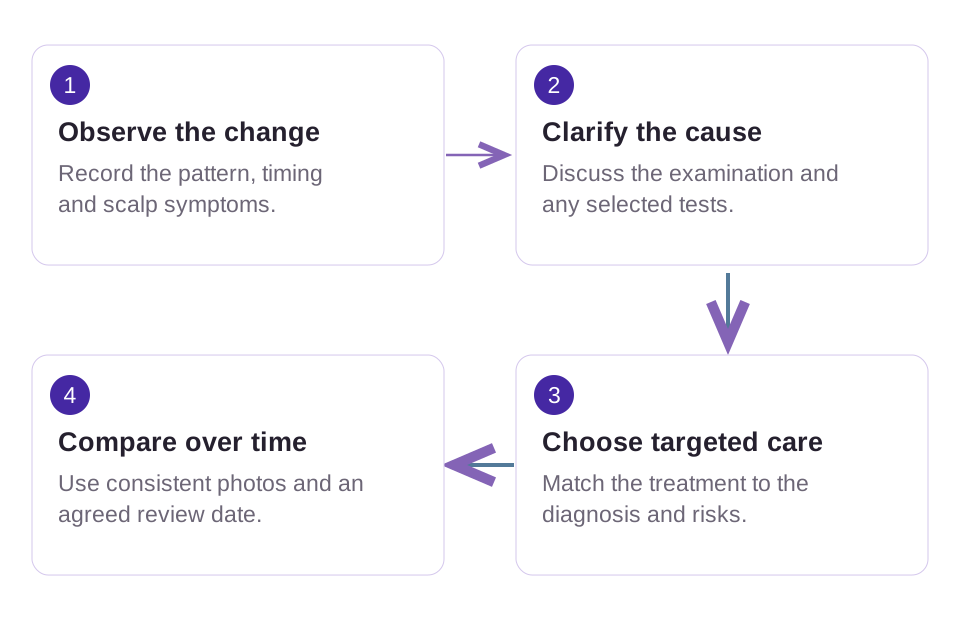
When looking at photographs online, remember that similar appearances can have different causes. Note when the change started, where it appears, and whether you also have itching, pain, scaling or redness. Those details are more useful at an appointment than deciding in advance which named product you want to buy.
What a dermatologist may check
A dermatologist can examine the scalp and hair and ask about the timing of the problem, family history, illnesses, medicines and hair-care practices. Blood tests or a scalp biopsy may be useful when the history and examination suggest a particular cause. Not everyone needs the same tests, and a commercial blood-test package does not establish a diagnosis by itself.
Bring a list of supplements as well as prescription medicines. If you have started several products together, write down their start dates. Ask the clinician to explain the working diagnosis, what remains uncertain, and which findings would change the plan. A clear explanation makes it easier to understand why a treatment is being offered.
Where finasteride fits in male pattern hair loss
Its role in male pattern hair loss
Oral finasteride is prescribed for male pattern hair loss in men. It reduces conversion of testosterone to dihydrotestosterone, a hormone involved in this condition. Its role is specific: it is not a general treatment for every form of shedding or a way to diagnose the cause by trying a tablet. Benefits require ongoing use and are not immediate.
Safety and other medical care
The medicine needs a discussion of risks and suitability. Report sexual side effects, breast changes or other concerning symptoms to your clinician. Finasteride also affects interpretation of some prostate blood tests, so other clinicians should know you take it. Read the patient information for your formulation and make sure the prescriber knows about changes that concern you.

How topical minoxidil differs
Scalp products and expected benefit
Topical minoxidil is applied to the scalp and is available without a prescription in several formulations. It is used for certain patterns of hair loss; product instructions differ by strength, formulation and intended user. It does not work for everyone, and using more than directed does not provide a reliable shortcut to regrowth.
Irritation and differences between formulations
Scalp irritation can occur. Ask for advice if the skin is painful, inflamed or damaged, or if symptoms extend beyond local irritation. Oral minoxidil is a different treatment and should not be confused with the over-the-counter scalp product. If you see the same ingredient name in a tablet and a topical product, do not assume that the precautions and instructions are interchangeable.
When to judge whether treatment is helping
Set a useful review interval
Hair growth changes gradually, so a few days or weeks of use rarely provide a meaningful comparison. The assessment period depends on the diagnosis and treatment. Your clinician can set a review date and explain whether the first goal is stabilizing loss or seeing new growth. Continuing treatment may be necessary to maintain benefits.
Make photographs comparable
A useful record is simple: photographs taken at agreed intervals with similar lighting, hairstyle and camera position, plus notes about tolerability and missed applications. Daily photographs under different conditions can make small variations look dramatic. Ask what level of change would count as useful for you and what the next step would be if the expected benefit does not appear.
Safety, pregnancy and compounded products
Pregnancy considerations matter even when a treatment is marketed mainly to men. People who are pregnant or could become pregnant should not handle broken or crushed finasteride tablets. Mention pregnancy plans and possible household exposure when discussing medicines. Follow the handling advice for the exact product rather than relying on a general internet comparison.
A topical or compounded product is not automatically safer than an oral licensed medicine. FDA has warned about potential risks associated with compounded topical finasteride, including systemic effects and unintended transfer to others. Ask which ingredients the product contains, its regulatory status, and how the proposed benefits and risks were assessed for your circumstances.
You don’t need all the answers before asking for help
A clear description of what changed is a useful starting point.
Support the hair you have
Gentle hair care can reduce avoidable damage while the cause of loss is investigated. Repeated pulling from tight styles, harsh chemical processing and excessive heat may worsen breakage or some forms of hair loss. Discuss your usual routine rather than feeling you must arrive with a completely different hairstyle or a cabinet full of new products.
Supplements deserve the same scrutiny as medicines. A product described as natural can still be unnecessary or harmful, and excess amounts of certain nutrients can contribute to hair loss. Ask whether a suspected deficiency has actually been identified before buying a high-dose supplement. A balanced, sustainable eating pattern is more useful than treating every change in hair as evidence of a missing vitamin.
Compare the plan, not just the subscription price
A treatment subscription can look convenient, but the details matter. Write down the exact ingredients, formulation, quantity, refill schedule and total price. Separate the cost of medicine from consultation charges and optional products. Ask how to contact a clinician if the treatment irritates your scalp, causes other symptoms, or is difficult to fit into your routine.
Before-and-after photographs and customer ratings cannot predict your result. Look for an explanation of the diagnosis being treated, realistic review intervals and a clear way to discuss lack of improvement. You should also know what happens to the prescription and any prepaid refills if the plan changes. These practical questions are useful whether care is online or in person.
Keep a clear record of the treatment you are using
Save the exact product name, formulation, strength and instructions alongside its start date. If a service changes the formulation at renewal, ask whether anything in the application or precautions changes too. This is especially useful when a product contains several ingredients: a broad label such as hair-growth treatment is not enough information for another clinician to assess side effects or household exposure.
At follow-up, bring the record together with a few comparable photographs and a short account of comfort and practical difficulties. Mention changes in the scalp as well as the hair. A routine that is hard to maintain needs discussion, even if photographs seem encouraging. Ask what should happen if there is no useful response and how the plan will be reviewed before the next paid renewal.
Questions for your visit
- What type of hair loss do I have, and is more than one cause possible?
- Is the goal to reduce further loss, improve density, or treat an inflamed scalp?
- Which treatment fits my medical history and daily routine?
- When should we assess progress, and what photographs or notes would help?
- What side effects or new symptoms should prompt an earlier appointment?
Common questions
Is finasteride suitable for all hair loss?
No. Its hair-loss indication concerns male pattern hair loss in men. Sudden shedding, patchy loss, scalp disease and other causes may need a different assessment and treatment.
Are finasteride and minoxidil the same type of medicine?
No. They work differently and have different routes of use and precautions. A clinician may discuss one or more treatments after identifying the cause of hair loss.
How quickly will I see hair regrowth?
Expect assessment over months rather than days. The timing depends on the cause and treatment, and not everyone regrows visible hair. Agree a review date and a realistic goal with your clinician.
Will the benefits last after I stop treatment?
Benefits of finasteride and minoxidil generally require continued use. Discuss a change in treatment before stopping, including what may happen to the hair you have maintained.
Should I take hair vitamins first?
Do not assume that shedding means you need supplements. A clinician can investigate a suspected deficiency. Taking too much of some nutrients can be harmful and can worsen hair loss.
Does topical finasteride avoid all systemic risks?
No. Topical application does not rule out absorption or systemic effects. Compounded products also require discussion of regulatory status, transfer to other people and product-specific precautions.
Sources & further reading
These references provide background for the guide. Guidance and product information can change; check the original source and discuss personal decisions with your clinician.