
Make this information work for you
Notice the parts that fit your own question. Keep a short record of changes, bring your current medication list and use the questions below to prepare for a conversation. This guide cannot diagnose a condition or select a treatment for you.
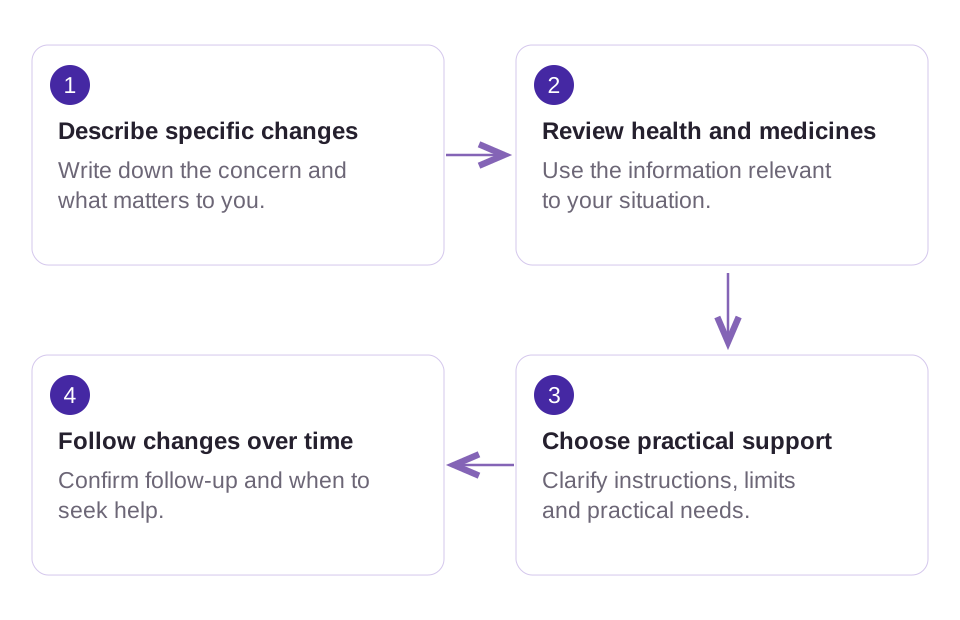
Describe what has changed
Use specific examples
Write down a few recent examples, such as repeated difficulty managing appointments, following familiar steps or remembering conversations. Explain when the change began and whether it is becoming more frequent. Concrete examples are more useful than a broad statement that your memory is bad.
Include daily functioning
Tell the clinician whether the concern affects work, cooking, finances, driving or taking medicines correctly. A person's usual abilities matter when judging a change. If someone close to you has noticed something different, you can invite them to contribute while keeping your preferences about involvement clear.
Sudden and gradual changes are different
Sudden confusion or a new neurological symptom is not a routine supplement question. Seek urgent assessment for an abrupt change, particularly with weakness, trouble speaking, severe headache or other emergency symptoms. Do not wait to see whether a memory product improves it.
For a gradual concern, arrange a clinical appointment and bring a brief history. Several health issues can affect concentration and memory, so it is useful to keep possible explanations open. An online quiz can prompt a conversation but cannot provide a complete diagnosis.
What an assessment may consider
A clinician may review medicines, sleep, mood, medical history and the effect on everyday activities, and may use cognitive assessments or selected tests. The purpose is to understand the pattern and possible causes. Not every memory concern requires the same investigations.
Ask what a test can establish, what it cannot establish and how its result would change the plan. Bring earlier reports when available, particularly if you have already had an assessment elsewhere. Keep the explanation in ordinary language so you understand whether the next step is monitoring, treatment or specialist evaluation.

Reviewing medicines and other products
Bring a complete list
Prescription medicines, nonprescription sleep aids, allergy products, supplements and alcohol can be relevant to a memory discussion. Include products used only occasionally. A pharmacist or clinician needs the exact ingredients to assess whether they might contribute to symptoms or interact with treatment.
Change treatment with a plan
Do not abruptly stop prescribed medicines because a side effect is mentioned online. Ask whether an alternative or supervised adjustment is appropriate. Keep track of agreed changes so you can describe what happened afterward without confusing several changes made at the same time.
Evaluating brain-health supplements
Evidence for a supplement depends on the ingredient, preparation, population and outcome studied. A laboratory finding or a small study does not establish that a commercial mixture prevents dementia or improves everyday memory. NCCIH reviews the limitations of evidence for several products marketed for cognitive health.
Ask for evidence on the exact benefit you want. A study involving people with a diagnosed condition may not apply to healthy adults seeking better concentration. Check adverse effects and interactions as carefully as possible benefits, and do not assume that a natural ingredient is risk free.
Making everyday habits practical
Sleep, physical activity, social contact and the management of existing health conditions can be part of a broader wellbeing plan. Discuss changes that fit your abilities and circumstances. Avoid treating any single habit as a guarantee that memory problems cannot occur.
Choose activities you enjoy and can sustain. A regular walk with a friend, a reading group or a manageable routine may be more useful in daily life than an expensive product you find burdensome. If symptoms make activities difficult, ask about suitable support rather than simply trying harder without guidance.
You don’t need all the answers before asking for help
A clear description of what changed is a useful starting point.
Tools that support daily tasks
Calendars, labeled storage, reminders and a consistent place for important items can reduce the practical burden of forgetfulness. Choose a small system that is easy to use. Too many apps or alarms can create confusion instead of providing a useful cue.
If remembering medicines is a problem, discuss a safe organization plan with a pharmacist or clinician. Ask before repackaging a medicine whose storage requirements are uncertain. Involve a trusted person when appropriate, with a clear agreement about what help is wanted and how privacy will be respected.
Comparing tests and cognitive programs
Commercial tests and training programs vary in what they measure and promise. Ask whether the service provides a validated assessment, who interprets results and what follow-up is available. A score improving on a practiced task does not necessarily show improvement in unrelated everyday abilities.
Check recurring costs, cancellation terms and data use before signing up. You should be able to explain what useful decision the service will help you make. If it mainly creates worry and directs you toward additional purchases, bring the results to an independent clinician before spending more.
Following changes over time
Agree on a review interval and which changes should prompt earlier contact. Keep a few meaningful examples rather than recording every ordinary lapse. At follow-up, discuss function, wellbeing and whether any changes in treatment or support have helped.
Ask for a written account of the next steps when the plan is complex. A clear route for further assessment is valuable even when an initial explanation remains uncertain. The aim is to understand and support your needs, rather than to label every lapse or promise a perfect memory.
Questions for your visit
- Which findings would explain the concern I have described?
- How would the proposed test or treatment change my care?
- What precautions apply to my medicines and health history?
- When should we review the plan, and what should prompt earlier help?
Common questions
Does forgetfulness always mean dementia?
No. Memory concerns can have several explanations. The pattern and effect on daily functioning matter, and a clinician can assess whether further investigation is appropriate.
Should sudden confusion wait for a routine appointment?
No. Sudden confusion or a new neurological symptom needs urgent assessment, especially with weakness, speech difficulty or other emergency symptoms. Do not treat it as a supplement issue.
Do brain supplements reliably prevent dementia?
Do not assume that they do. Evidence is limited for many marketed products, and a claim about one ingredient does not establish that a commercial mixture prevents disease.
Can medicines contribute to memory concerns?
Some medicines and other substances can be relevant. Bring a complete list to an assessment, but do not stop prescribed treatment abruptly without professional advice.
Is a brain-training score a medical diagnosis?
No. A commercial score is not a complete clinical assessment, and improvement on a practiced task may not reflect broader daily functioning. Ask what the result actually measures.
What should I record before a memory appointment?
Record a few specific examples, when changes began and their effect on daily tasks. Include medicines, sleep concerns and previous results, and involve a trusted person if you wish.
Sources & further reading
These references provide background for the guide. Guidance and product information can change; check the original source and discuss personal decisions with your clinician.